After powdery blend fertilizer production, if you want to process them into commerical fertilizers with high value by granulation, hay 2 type of solutions for you.

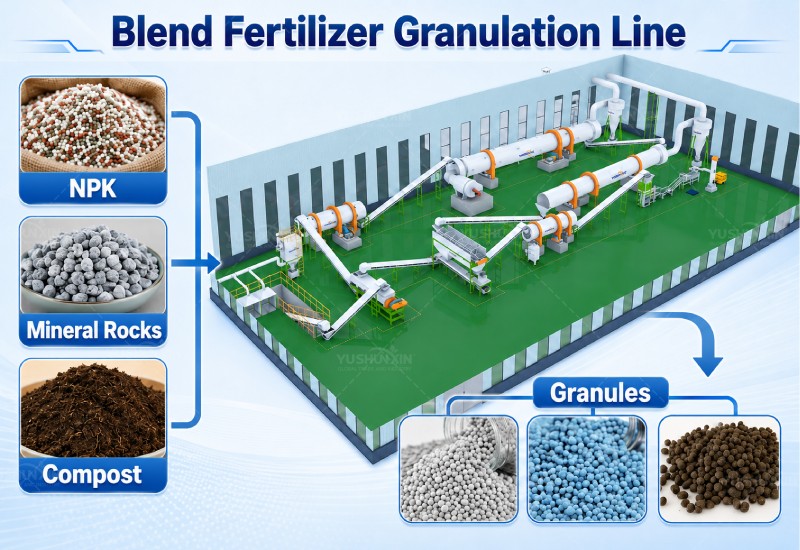
Capacidad:1-30TPH
Granules size:1-10milímetros
Granulation rate:90%-97%
Solicitud:NPK, compost, KCL, Ammonium chloride,etc.
Many fertilizer producers start with powdered blended fertilizers manufacturing. As market demand increases, many fertilizer manufacturers look for ways to upgrade their production processes. A blended fertilizer granulation line allows producers to convert powder mixtures into uniform fertilizer granules. Granular blended fertilizers offer better flowability, easier packaging, and higher commercial value. YUSHUNXIN provides complete solutions for blended fertilizer granulation, including raw material preparation, mixing systems, granulation equipment, and post-treatment machines. Feel free to contact us!
Más informaciónAfter powdery blend fertilizer production, if you want to process them into commerical fertilizers with high value by granulation, hay 2 type of solutions for you.
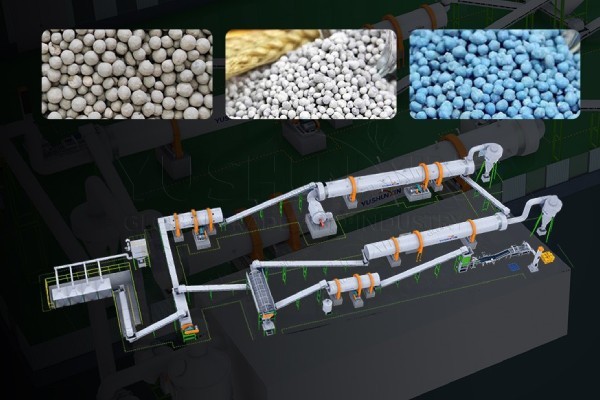
Las mezclas de NPK en polvo son los materiales más comunes utilizados en la producción de fertilizantes mezclados.. Estos materiales suelen incluir: Urea powder, Diammonium phosphate (SALTO), Fosfato monoamónico (MAPA), Cloruro de potasio (FREGAR), y sulfato de potasio. Producers can mix these components in different ratios to prepare customized blend NPK fertilizer. Luego, la mezcla ingresa al sistema de granulación para formar partículas uniformes..
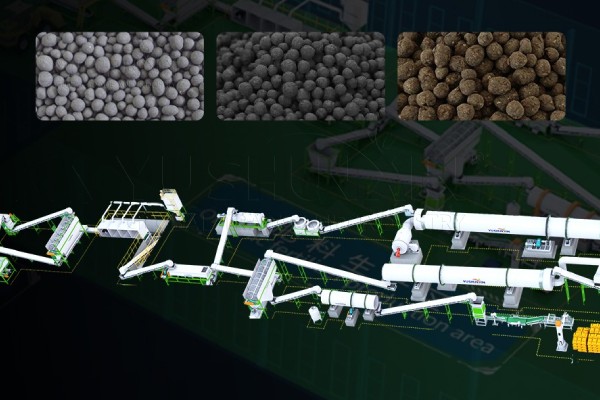
Some fertilizer manufacturers also mixs compost with additives to produce granular organic fertilizers. Como, producción de biofertilizantes, fabricación de fertilizantes de biocarbón, organic-mineral fertilizer making, etc.. You can buy a professional organic fertilizer granulation system from YUSHUNXIN.
Además, there are also many other blend fertilizer granulation lines for you. Ven a verlos ahora!
Before granulation, producers must first create a uniform powdered fertilizer mixture. This step plays a key role in granule quality and nutrient distribution.
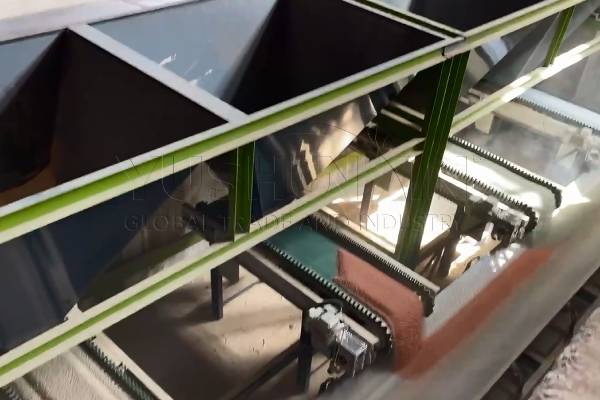
Primero, determine the fertilizer formula and calculate the required proportion of each raw material. Then send the materials into an sistema de dosificación automático for precise weighing. The fertilizer batching machine usually includes 1–7 storage bins, which allows producers to handle several raw materials at the same time. A PLC-based weighing system controls the discharge of each bin and keeps the ingredient ratio stable during continuous production.
Después del procesamiento por lotes, the materials enter a fertilizer powder mixer for thorough blending. A horizontal mixer or a twin-shaft mixer works well for powder fertilizer mixing. Inside the machine, rotating shafts and mixing blades move the materials continuously. The equipment distributes nutrients evenly and prevents material segregation. After complete mixing, the powder fertilizer mixture moves to the next step of the granulation process.
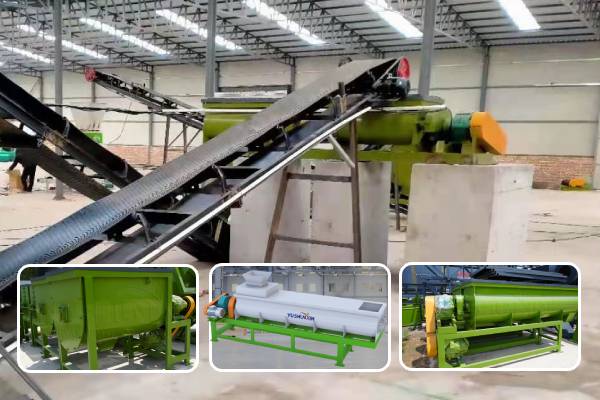
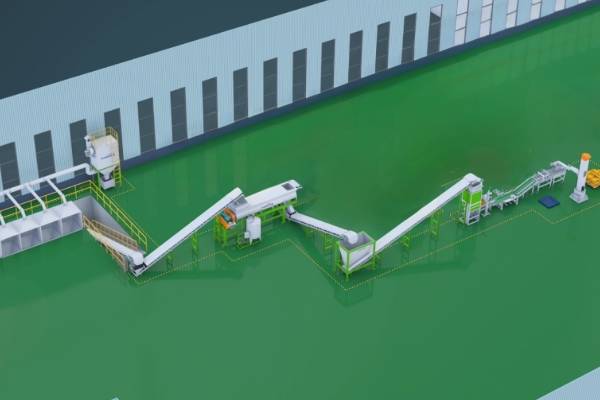
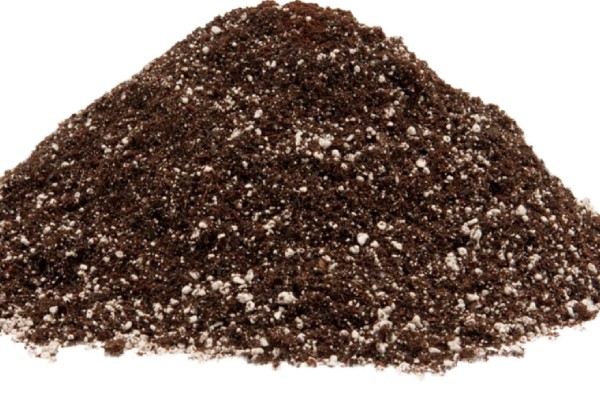
In a blended fertilizer granulation line, two common granulation methods are used to process powdered blended fertilizers: wet granulation and dry granulation. Each technology suits different raw materials, production capacities, and investment plans.
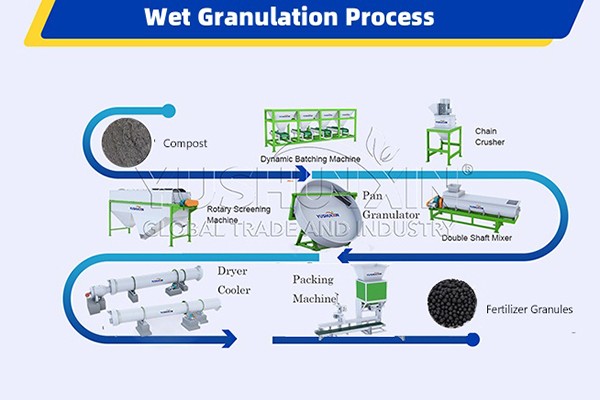
Wet granulation forms fertilizer granules by adding moisture or binding agents. This process allows small powder mixture to stick together and gradually grow into larger fertilizer granules. Two main machines are commonly used in wet granulation systems: rotary drum granulator and disc granulator.
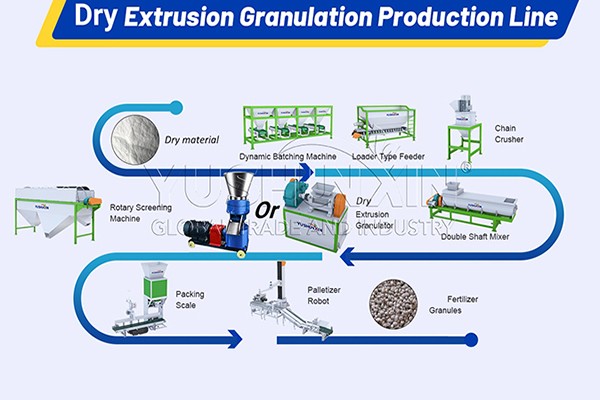
Dry granulation forms fertilizer granules without water or binding agents. The process compresses powder materials directly into dense particles. This method is widely used for NPK powder mixtures. Because it does not require a drying process, it usually consumes less energy.
Wet granulation systems require several post-treatment processes to stabilize blended fertilizer granules.
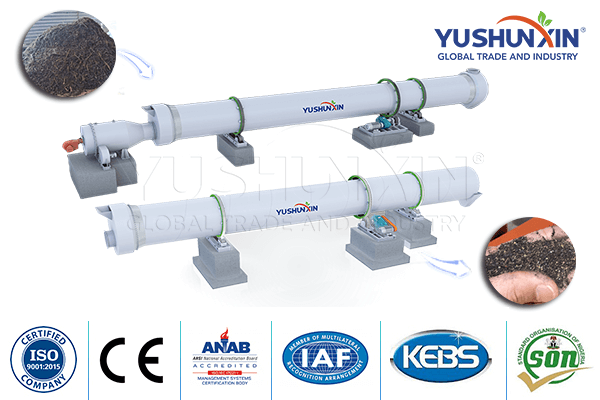
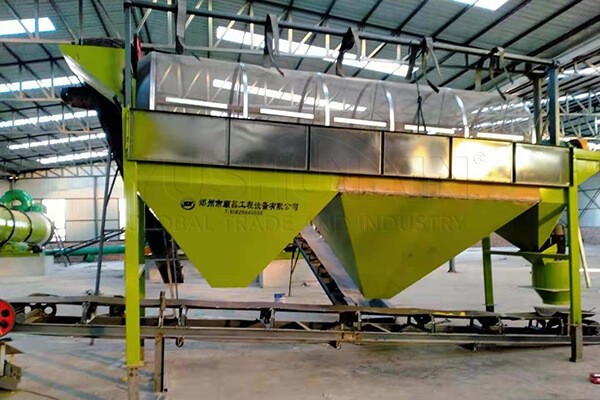
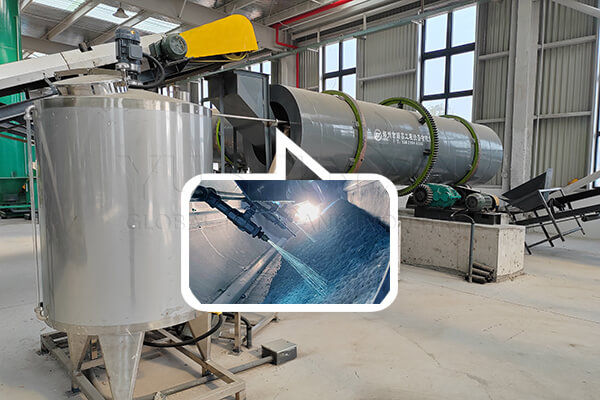
The rotary dryer removes excess moisture from freshly formed granules. Hot air flows through the rotating drum and evaporates water from the particles.
After drying, the fertilizer granules remain hot. A rotary cooler reduces the temperature by passing cool air through the material.Cooling prevents granule deformation and prepares the product for packaging.
A rotary screening machine separates oversized and undersized particles. Qualified granules move to the next process, while unqualified materials return to the granulator. This step ensures uniform particle size.
Some fertilizer producers install a coating machine. The machine sprays protective oil or powder onto the granule surface. Coating improves moisture resistance and prevents particle caking.
The investment cost of a blended fertilizer granulation line depends on the existing production system and the required capacity.
Some fertilizer factories already operate a powder blending system. So, the producer only needs to add granulation and post-treatment equipment. Typical equipment includes: pelletizer, dryer, cooler, screening machine, and packaging system.The total investment for this upgrade usually ranges from $100,000 a $200,000.
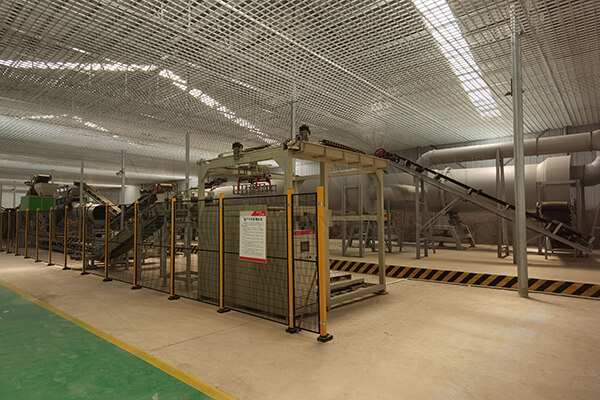
New fertilizer plants must install a complete mixed fertilizer granulation making system. The equipment typically includes: batching machine, mezclador de fertilizantes, granulation equipment, drying and cooling unit, screening and packaging equipment. Depending on production capacity and equipment selection, the investment usually falls between $150,000 y $550,000.
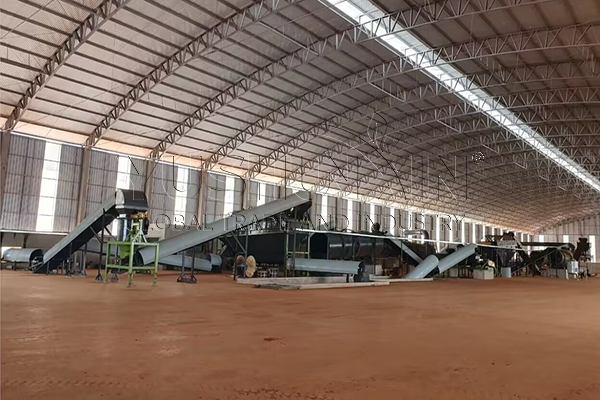
Granulating blended fertilizers provides clear economic advantages for fertilizer producers.
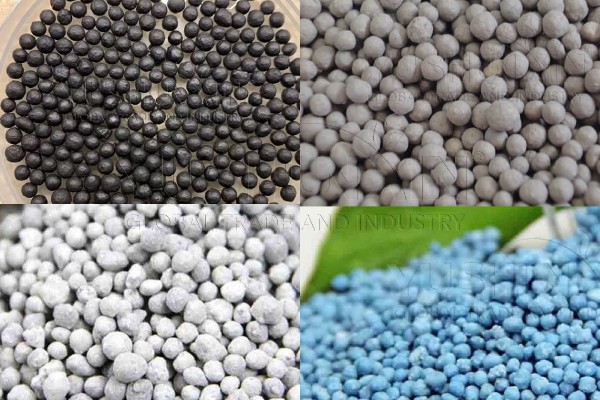
Whether you requires a solution for blend fertilizer granulation or prepare standard fertilizer pellets for Fabricación de fertilizantes BB, YUSHUNXIN can offer you best answers. Come to get them now!
Deja tu mensaje
CONSULTA GRATUITA
Obtenga fertilizante personalizado
Combinando la solución del proyecto ahora!

YUSHUNXIN es un fabricante de soluciones llave en mano para proyectos de fabricación de fertilizantes mixtos.. Del diseño de maquetación, fabricación de equipos hasta la instalación, operation guidance and after-sale service. We offer one-stop service to help you start your fertilizer making business smoothly and quickly. Cuéntanos tus objetivos, y construyamos juntos experiencias inolvidables.


Deja tu mensaje
 Cotización Gratuita
Cotización Gratuita
Cotización Gratuita


