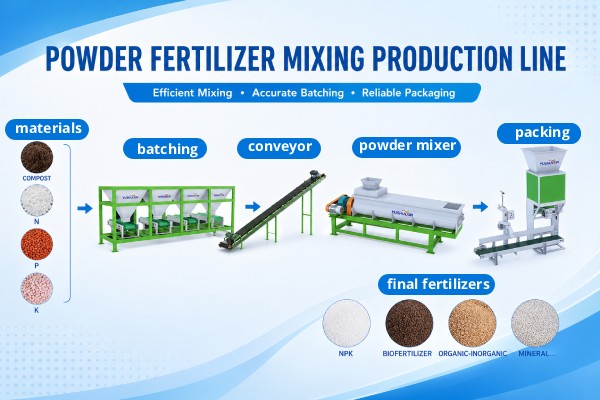
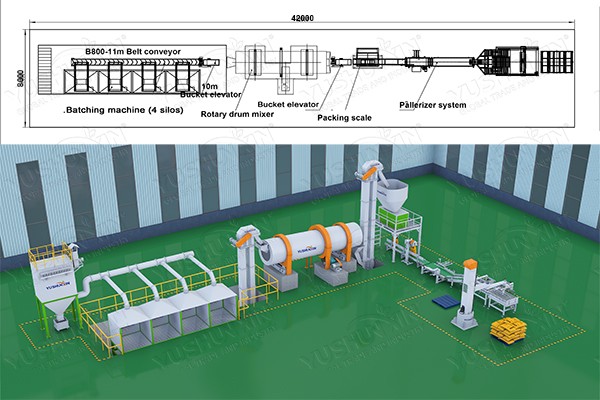
A typical NPK fertilizer blending system includes several main equipment. Each machine performs a specific function in the production process.

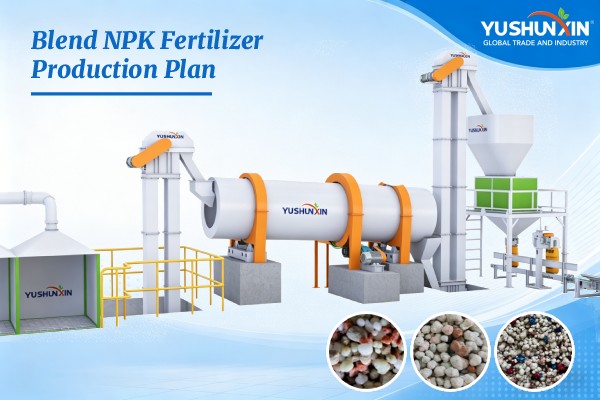
Capacity:2-100TPH
Feed Materials:both granules & powder
Equipment Materials: carbon steel, stainless steel
Cost:$30,000-$600,000
An NPK fertilizer blending plant helps fertilizer producers mix nitrogen, phosphorus, and potassium materials according to specific nutrient formulas. Compared with full compound fertilizer production lines, a blending plant requires fewer machines and lower investment. At the same time, it offers high production flexibility. You can quickly change fertilizer formulas based on market demand.
Learn MoreA typical NPK fertilizer blending system includes several main equipment. Each machine performs a specific function in the production process.
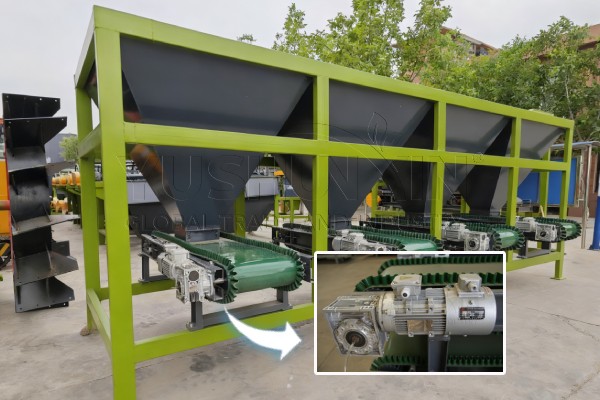
The batching system controls the ratio of each fertilizer material. Fertilizer producers can choose between static batching systems and dynamic batching systems, depending on the required automation level. The system usually includes multiple storage bins, weighing sensors, and a control panel. Operators can set fertilizer formulas directly in the control system. The equipment then feeds each raw material according to the preset ratio.
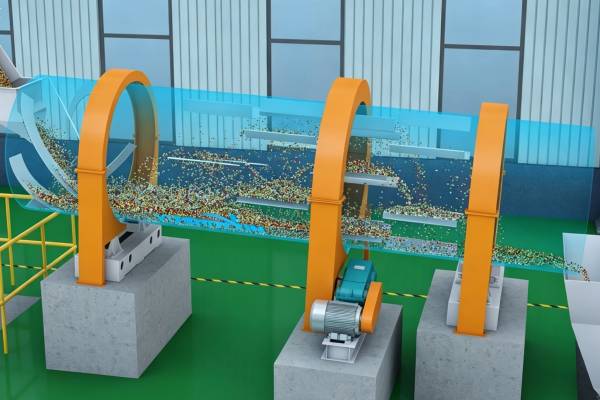
The mixing machine blends different NPK materials into a uniform fertilizer product. Several types of mixers are commonly used in blended fertilizer manufacturing plants. For powdered fertilizer mixing, manufacturers often choose horizontal mixers, single-shaft mixers, or double-shaft mixers. These machines create strong mixing motion and distribute fine powders evenly. For granular NPK fertilizer, producers usually use BB fertilizer mixers or rotary drum blending machines. These mixers gently tumble the fertilizer granules to achieve uniform distribution while preventing particle breakage.
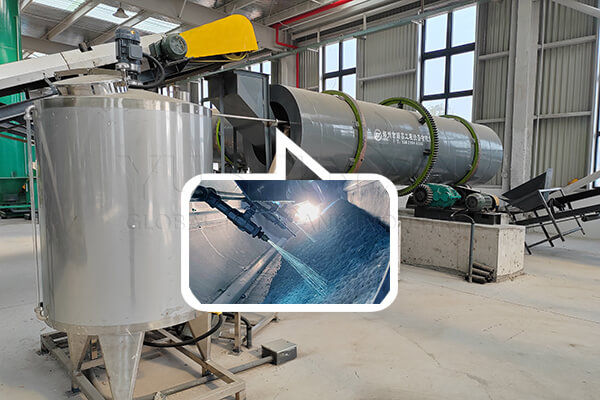
Coating machines are often installed after the mixing stage for granular fertilizers. The equipment sprays a small amount of coating liquid onto the fertilizer surface. This process improves fertilizer appearance and reduces moisture absorption during storage. The coating layer can also contain anti-caking agents or functional additives, which improve the overall product quality.
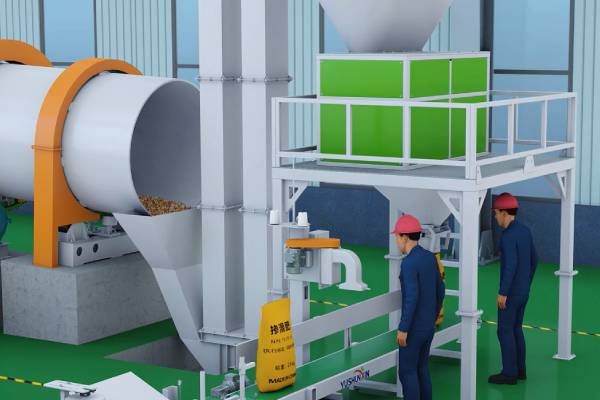
After mixing, the finished fertilizer moves to the packaging system. Producers can select single-bucket or double-bucket automatic packing machines based on production capacity. Powder and granular fertilizers require slightly different packaging designs. Granular fertilizer packaging machines usually have a larger feeding inlet. Powder fertilizer packing systems use steeper feeding angles to reduce friction and allow faster material flow.
Yes, an NPK fertilizer blending manufacturing plant can process both powder and granular fertilizer materials. However, when designing these two production systems, the focus is different.
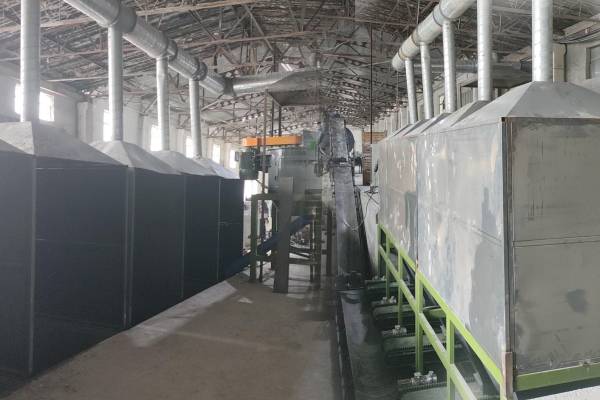
For powder NPK fertilizer blending line, dust control becomes an important issue. Fine fertilizer particles can generate airborne dust during conveying and mixing. To maintain a clean working environment, it is necessary to install dust collectors and sealed conveying systems. In addition, fertilizer suppliers can equip the feeding inlet, mixer discharge outlet, and packaging machine port with pulse dust collectors to further reduce dust emissions.
For NPK granules fertilizer mixing, the production line also focuses on protecting fertilizer particles while ensuring uniform blending. YUSHUNXIN typically recommends equipment such as BB fertilizer batching systems, rotary drum blending machines, and fertilizer coating machines. These machines gently mix the granules without damaging their structure. It ensures that the final fertilizer maintains consistent nutrient distribution and good appearance.
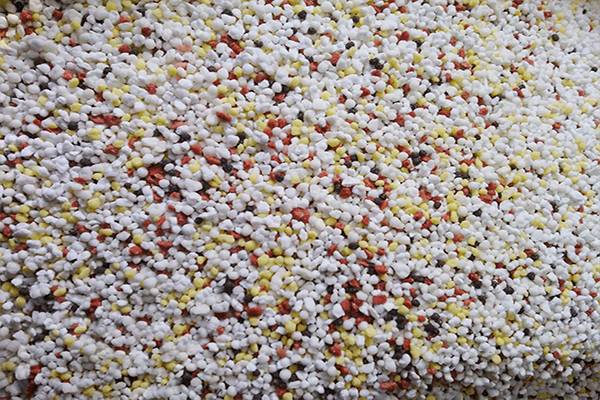
Some fertilizer manufacturers start with powder blending and later want to increase product value by producing NPK fertilizer granules. After mixing the raw materials, the NPK fertilizer mixing plant can add a granulation process to form solid fertilizer pellets.
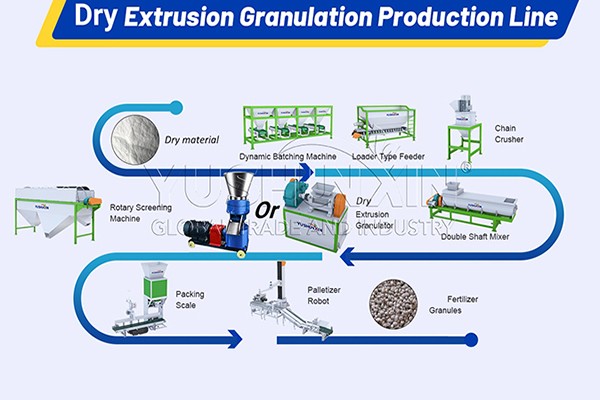
One common method is dry granulation using a roller compactor granulator. This technology compresses the mixed powder into compact fertilizer granules. The process does not require drying, so it reduces energy consumption and production costs.
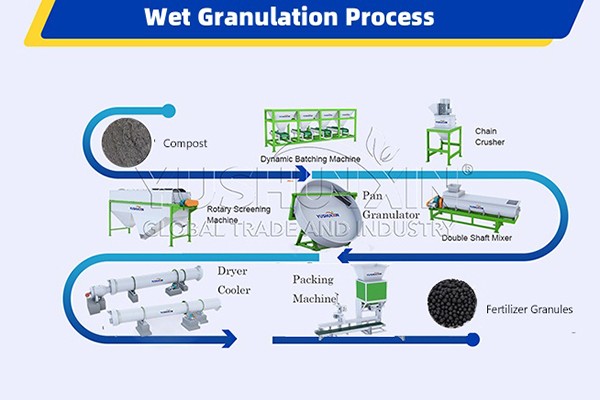
Another option is wet granulation, which works well for certain low-grade raw materials. In this process, producers can use equipment such as disc granulators or rotary drum granulators. The system usually requires additional machines, including dryers, coolers, and screening equipment.
For many fertilizer businesses, blending plants provide a practical starting point because they require lower investment and shorter installation time. The investment cost of an NPK fertilizer blending plant depends on several factors, including production capacity, automation level, and equipment configuration.
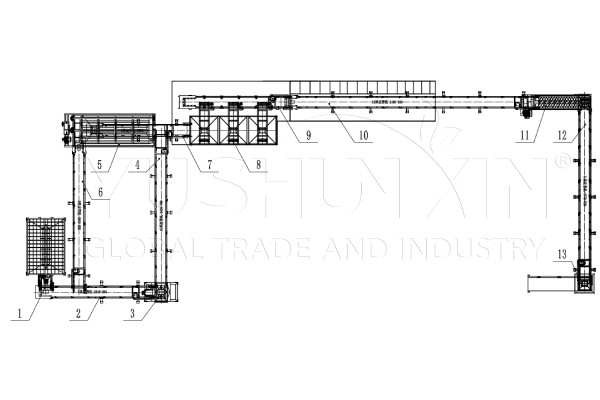
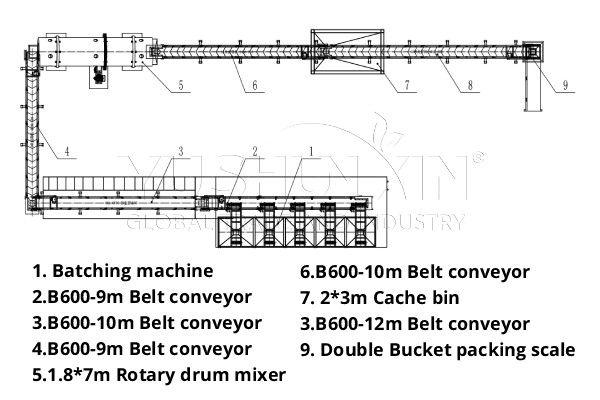
For a basic powder blending system, the total investment usually ranges from $50,000 to $150,000. This configuration includes batching equipment, mixing machines, conveyors, and packaging machines.
Granular fertilizer blending plants often require additional equipment such as coating machines and larger mixers. These systems typically cost between $80,000 and $200,000.
If a producer plans to install a full NPK granulation line in the future, the investment may increase further because the plant will require granulators, dryers, coolers, and screening machines.
Inquiry NowChoosing a reliable blend fertilizer equipment manufacturer is essential when investing in an NPK fertilizer mixing factory. A professional supplier should not only provide high-quality equipment but also offer complete technical support for plant design, installation, and production startup.
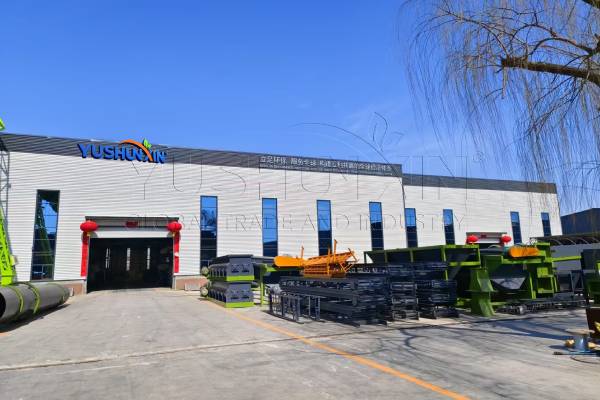
YUSHUNXIN has many years of experience in fertilizer equipment manufacturing and provides customized NPK fertilizer blending project solutions for customers worldwide. If you are planning to build a fertilizer blending production line, feel free to contact our team for professional equipment recommendations and project support.
Leave Your Message
FREE CONSULTATION
Get You Customized Fertilize
Blending Project Solution Now!

YUSHUNXIN is a turnkey solutions manufacturer for mixed fertilizer making projects. From layout design, equipment manufacturing to installation, operation guidance and after-sale service. We offer one-stop service to help you start your fertilizer making business smoothly and quickly. Tell us your goals, and let's build unforgettable experiences together.


Leave Your Message
 Free Quote
Free Quote
Free Quote


